
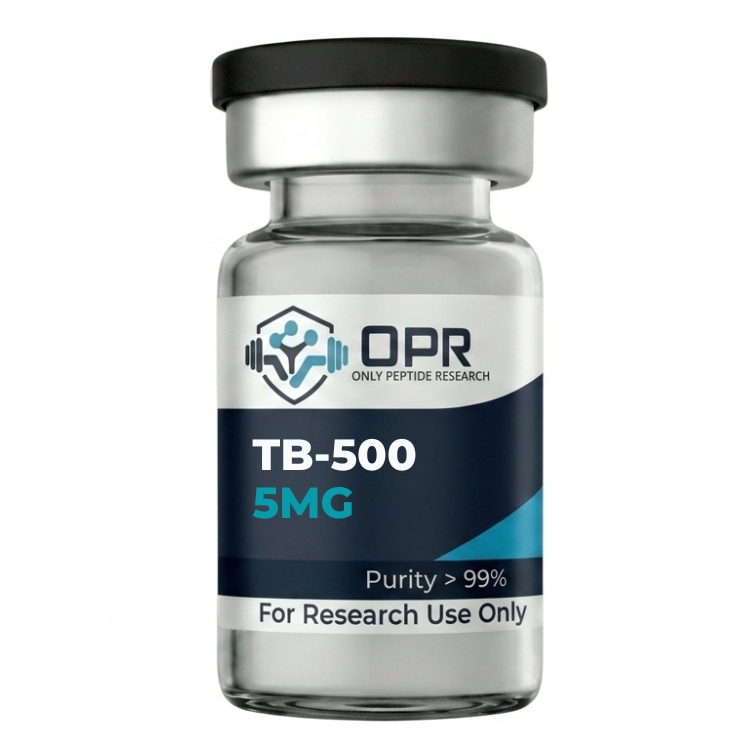
Size: 5mg
Contents: TB-500 (5mg)
Form: Lyophilized Powder
Purity: ≥99%

TB-500 is a synthetic peptide derived from a naturally occurring protein known as Thymosin Beta-4 (TB4). It is widely studied in research focused on cellular migration, tissue regeneration, and recovery-related biological processes. Due to its involvement in cellular communication and repair mechanisms, TB-500 has become a significant compound in regenerative and physiological research.
Researchers commonly investigate TB-500 for its potential role in supporting tissue maintenance, cellular regeneration, and structural integrity. Its unique biological properties make it a valuable subject in studies involving wound healing, muscle tissue function, and cellular repair pathways. refrigeration is recommended, particularly after reconstitution for laboratory research purposes. Proper storage and handling under controlled laboratory conditions help preserve the peptide’s integrity and support consistent experimental results.
TB-500 is recognized in scientific research for its potential influence on cellular movement and tissue regeneration mechanisms. It is frequently examined for its ability to support biological processes associated with tissue maintenance and recovery.
Research continues to explore how TB-500 may contribute to cellular organization, tissue remodeling, and regenerative signaling pathways. Its broad range of potential applications has made it a widely studied peptide in laboratory environments.
Peptide Type: Synthetic Thymosin Beta-4 Fragment
Research Focus: Tissue regeneration and cellular repair
Primary Function: Cellular migration and recovery pathway research
Research suggests that TB-500 may influence cellular processes involved in tissue repair and regeneration. It is believed to interact with pathways associated with cell migration, cytoskeletal organization, and cellular communication.
These mechanisms may contribute to tissue remodeling and cellular maintenance processes, making TB-500 an important compound for studying regenerative biological functions in controlled laboratory settings.
TB-500 is commonly utilized in laboratory studies focused on:
Its unique biological profile makes it a valuable subject in ongoing scientific investigations.
In controlled research environments, TB500 has been associated with biological pathways involved in tissue maintenance and cellular regeneration. Researchers continue to examine its potential role in supporting cellular movement, tissue organization, and recovery-related processes.
Ongoing studies are exploring how TB500 may contribute to regenerative signaling and structural tissue integrity, further expanding its significance in peptide-based research.
Product Name: TB-500
Content: 5mg / 2mg
Form: Lyophilized Powder
Purity: ≥99%
Store TB-500 in a cool, dry place away from direct light. Refrigeration is recommended to maintain stability, particularly after reconstitution for research purposes.to preserve peptide integrity and ensure consistent experimental results. Proper storage under controlled laboratory conditions supports compound stability and helps maintain reliable outcomes in scientific research. Always follow standard laboratory handling protocols and store TB-500 5MG securely for use by qualified research professionals only.
TB-500 is intended strictly for research and laboratory use only. It is not approved for human consumption, medical use, or therapeutic applications. All handling must be performed by qualified professionals in accordance with applicable laws and regulations.This compound should only be handled by qualified professionals in controlled laboratory environments following proper scientific protocols. All research activities involving must comply with applicable laws, regulations, and institutional guidelines to ensure safe and responsible laboratory practices.