
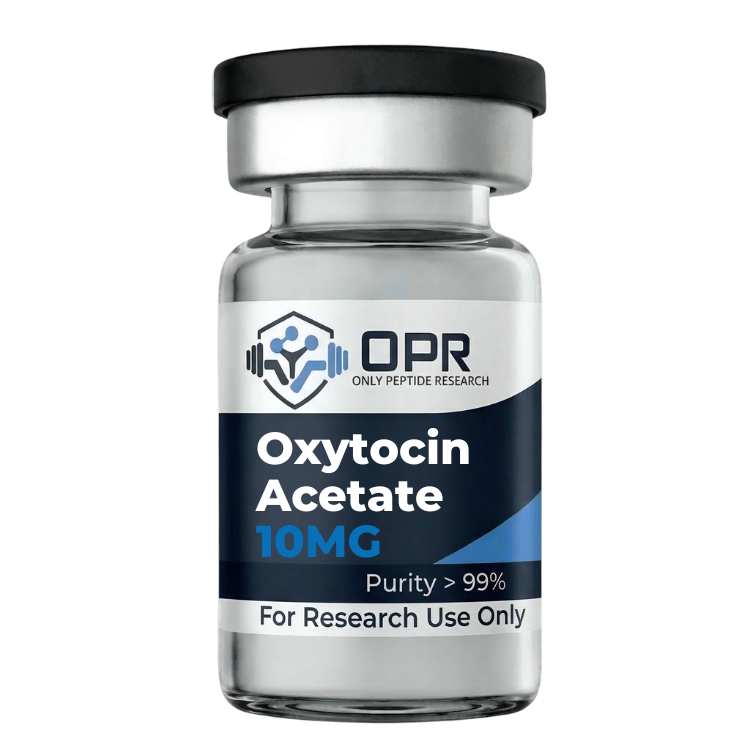
Size: 2mg / 5mg / 10mg
Contents: Oxytocin Acetate (2mg / 5mg / 10mg)
Form: Lyophilized Powder
Purity: ≥99%
Quantity: 10 Vials

Oxytocin Acetate is a synthetic peptide research compound studied for its interaction with oxytocin receptors and related cellular signaling pathways. Researchers investigate Oxytocin Acetate in controlled laboratory environments to better understand receptor activity, neuroendocrine signaling, cellular communication, and physiological regulation.
Due to its relationship with oxytocin receptor pathways, Oxytocin Acetate has become a subject of scientific interest in research involving peptide signaling, receptor biology, neuroendocrine processes, and cellular responses. Its defined molecular structure supports controlled laboratory investigations into peptide-receptor interactions and related biochemical mechanisms.
Oxytocin Acetate is a synthetic peptide compound investigated in laboratory research focused on oxytocin receptor activity and associated signaling pathways. Researchers study how this peptide interacts with receptor systems and cellular pathways involved in neuroendocrine communication.
Laboratory investigations continue to examine the molecular characteristics of Oxytocin Acetate, receptor interactions, and downstream cellular signaling. These studies contribute to a broader understanding of peptide hormones, receptor biology, and cellular communication mechanisms.
Compound Type: Synthetic Peptide Research Compound
Research Focus: Oxytocin receptor and cellular signaling research
Primary Function: Peptide-receptor and neuroendocrine pathway research
Research involving Oxytocin Acetate focuses on its interaction with oxytocin receptors, which belong to the G protein-coupled receptor family. Scientists investigate these receptor interactions to better understand cellular signaling and downstream biological responses in controlled experimental systems.
Researchers continue to examine how oxytocin receptor activation influences intracellular signaling pathways and cellular communication. These investigations help characterize peptide-receptor interactions and the molecular mechanisms associated with oxytocin-related signaling.
Oxytocin Acetate is commonly investigated in laboratory studies focused on:
Its research profile makes Oxytocin Acetate relevant to scientific investigations involving receptor activity, peptide signaling, neuroendocrine communication, and related cellular pathways.
Oxytocin Acetate has attracted scientific interest because of its relationship with oxytocin receptor signaling and peptide-mediated cellular communication. Researchers continue to study its molecular characteristics and receptor interactions to better understand signaling processes within controlled experimental models.
Ongoing laboratory research examines oxytocin-related pathways, receptor activity, and cellular responses. Continued investigation may provide additional insight into peptide-receptor interactions and the broader mechanisms involved in neuroendocrine and cellular signaling.
Product Name: Oxytocin Acetate
Form: Lyophilized Powder
Purity: ≥99%
Size: 2mg / 5mg / 10mg
Store in a cool, dry place away from direct sunlight, heat, and moisture to help maintain product stability and research-grade quality. Refrigeration may be appropriate according to established laboratory storage protocols. After reconstitution, follow applicable laboratory procedures and stability requirements for proper storage and handling.
Proper storage under controlled laboratory conditions can help preserve the compound’s integrity and support consistent experimental research. Always handle and store the product according to appropriate laboratory protocols and keep it in a secure environment intended for qualified research professionals.
Oxytocin Acetate is intended strictly for research and laboratory use only. It is not approved for human consumption, medical use, or therapeutic applications. This product is not intended to diagnose, treat, cure, or prevent any disease or condition. All handling and experimentation must be performed by qualified professionals in accordance with applicable laws, regulations, and institutional laboratory protocols.