
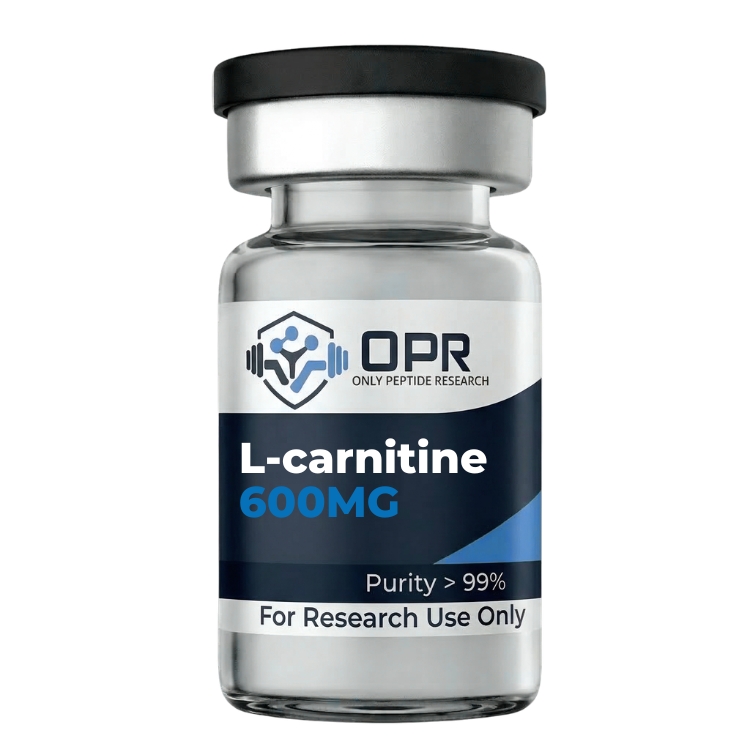
Size: 600mg / 1200mg
Contents: L-Carnitine (600mg / 1200mg)
Form: Research-Grade Material
Purity: ≥99%
Quantity: 10 Vials

L-Carnitine is a naturally occurring amino-acid derivative studied extensively in laboratory research for its role in fatty-acid transport, mitochondrial metabolism, and cellular energy pathways. Researchers investigate L-Carnitine in controlled laboratory environments to better understand energy metabolism and mitochondrial function.
Because of its involvement in transporting long-chain fatty acids into mitochondria, L-Carnitine is commonly studied in research involving cellular energy production, lipid metabolism, metabolic signaling, and mitochondrial biology.
L-Carnitine is a naturally occurring compound involved in the transport of fatty acids into mitochondria, where they can undergo oxidation. Researchers study its biochemical properties to better understand cellular energy metabolism and lipid utilization.
Laboratory investigations continue to examine L-Carnitine’s relationship with mitochondrial function, fatty-acid metabolism, and cellular energy pathways.
Compound Type: Amino-Acid Derivative Research Compound
Research Focus: Mitochondrial and fatty-acid metabolism
Primary Function: Cellular energy and metabolic pathway research
Research involving L-Carnitine focuses on its role in transporting long-chain fatty acids across the mitochondrial membrane. This process is an important component of fatty-acid oxidation and cellular energy metabolism.
Scientists investigate these mechanisms to better understand mitochondrial activity, lipid utilization, and metabolic regulation under controlled experimental conditions.
L-Carnitine is commonly investigated in laboratory studies focused on:
Its established role in fatty-acid transport makes L-Carnitine relevant to a wide range of metabolic and mitochondrial research.
L-Carnitine continues to attract scientific interest because of its important role in mitochondrial fatty-acid transport. Researchers investigate how its availability and metabolic activity relate to cellular energy production and lipid metabolism.
Ongoing laboratory studies aim to expand understanding of mitochondrial biology, fatty-acid oxidation, and cellular metabolic regulation.
Product Name: L-Carnitine
Content: 600mg / 1200mg per vial
Quantity: 10 Vials
Form: Research-Grade Material
Purity: ≥99%
Store in a cool, dry place away from direct sunlight, heat, and moisture. Follow established laboratory storage protocols and manufacturer recommendations to help maintain product stability and research-grade quality.
After preparation or reconstitution, follow applicable laboratory handling and storage procedures.
L-Carnitine is intended strictly for research and laboratory use only. It is not approved for human consumption, medical use, or therapeutic applications. All handling and experimentation must be performed by qualified professionals in accordance with applicable laws, regulations, and institutional laboratory protocols.