
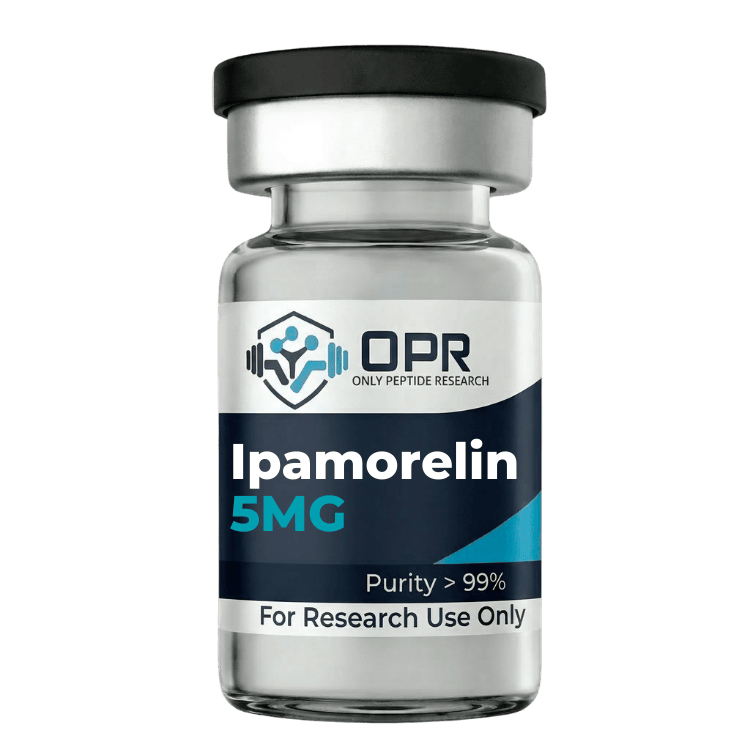
Size: 5mg
Contents: Ipamorelin (5mg)
Form: Lyophilized powder
Purity: >99%
SKU: P-IPAMORELIN-5

Ipamorelin is a synthetic peptide composed of five amino acids and classified as a Growth Hormone Secretagogue (GHS). It has been specifically developed to interact with ghrelin receptors, also known as Growth Hormone Secretagogue Receptors (GHS-R), which are primarily located in the pituitary gland. This gland plays a key role in regulating the natural production and release of growth hormone (hGH).
Through its interaction with these receptors, Ipamorelin is widely researched for its potential ability to stimulate the release of growth hormone. Its targeted and selective mechanism makes it a valuable compound in studies focused on endocrine function and hormone signaling pathways.
Ipamorelin is recognized in research as a highly selective growth hormone secretagogue. Unlike some earlier compounds in this class, it is commonly studied for its potential to increase growth hormone levels without significantly affecting other pituitary hormones such as prolactin or adrenocorticotropic hormone (ACTH).
The potential increase in growth hormone may contribute to elevated levels of insulin-like growth factor-1 (IGF-1), which is associated with anabolic activity. IGF-1 is often considered a key mediator in cellular growth, tissue repair, and metabolic function. Because of this, Ipamorelin is frequently explored in research involving muscle development, bone metabolism, and cellular proliferation.
Molecular Formula: C38H49N9O5
Molecular Weight: 711.86 g/mol
Also Known As: NNC 26-0161
Research studies suggest that Ipamorelin may promote the release of growth hormone from pituitary cells through its action on GHS receptors. Experimental models have indicated that it may act as a selective agonist, supporting growth hormone secretion while maintaining specificity toward its target receptors.
This level of selectivity has made Ipamorelin a subject of continued interest in scientific research and potential future applications.
Studies indicate that Ipamorelin may influence somatotroph cells within the anterior pituitary gland by initiating a series of intracellular signaling events.
These processes may involve activation of phospholipase C (PLC), leading to the production of secondary messengers such as inositol triphosphate (IP3) and diacylglycerol (DAG). IP3 may stimulate the release of calcium ions within the cell, while DAG may activate protein kinase pathways. Together, these mechanisms may contribute to the release of stored growth hormone from pituitary cells.
Research has explored the potential role of Ipamorelin in bone-related studies. It is theorized that the peptide may influence osteoblast activity through growth hormone-mediated mechanisms, potentially supporting bone formation and development.
Experimental findings suggest possible increases in bone mineral content and overall body mass, while maintaining stable bone density ratios. These observations continue to be evaluated in ongoing studies.
Digestive Function Studies
Ipamorelin has also been examined in research related to gastrointestinal function. Some studies suggest that it may support gastric motility and influence the rate of gastric emptying.
In experimental models where digestive movement was reduced, the presence of this peptide appeared to improve gastric activity. Additional research indicates that it may enhance smooth muscle contractions within the digestive system.
Due to its interaction with ghrelin receptors, Ipamorelin is also studied for its potential role in appetite regulation and metabolic processes. Research models have indicated possible increases in food intake and body mass, which may be associated with changes in energy balance.
Some findings suggest that these effects may occur through both growth hormone-related and independent mechanisms, making it a compound of interest in metabolic research.
Research has also explored the potential of Ipamorelin in nitrogen balance and protein metabolism. In certain experimental conditions, it has been associated with reduced urea synthesis and improved nitrogen retention.
These findings suggest that it may play a role in supporting anabolic processes and protein utilization, which are important areas of study in metabolism and tissue development.
Ipamorelin is intended strictly for research and laboratory use only. It is not approved for human consumption, medical use, or therapeutic applications. All handling should be conducted by qualified professionals in accordance with applicable regulations.